Zilin Huang

Research Associate
Department of Civil and Environmental Engineering
University of Wisconsin-Madison
Office: Engineering Hall 1217
Email: zilin.huang@wisc.edu










 CV:
CV: Hi, thanks for stopping by! 👋
I am currently a Research Associate at the  University of Wisconsin–Madison and a Visiting Research Fellow at
  Purdue University. My research to date has focused on advancing generalizable and deployable Physical AI. Specifically, I aim to develop embodied foundation models for autonomous agents (e.g., self-driving vehicles and robots), transfer their capabilities to the physical world, and enable them to safely and reliably operate alongside humans. Much of my work is implemented and evaluated on real-world physical platforms, such as full-size drive-by-wire vehicles.
I am a founding member of
Purdue University. My research to date has focused on advancing generalizable and deployable Physical AI. Specifically, I aim to develop embodied foundation models for autonomous agents (e.g., self-driving vehicles and robots), transfer their capabilities to the physical world, and enable them to safely and reliably operate alongside humans. Much of my work is implemented and evaluated on real-world physical platforms, such as full-size drive-by-wire vehicles.
I am a founding member of  Sky-Lab and a member of the
  Purdue Autonomous Go-Kart Initiative (PAGKI). I am also affiliated with the
  Center for Connected and Automated Transportation (CCAT), the
  Smart Highway Research Center (SHRC), and the
  Tribal and Rural Autonomous Vehicles for Efficiency, Livability and Safety (TRAVELS) Center.
I received my Ph.D. and M.S. degrees from the University of Wisconsin–Madison under Prof. Sikai (Sky) Chen’s supervision. Before joining UW–Madison, I worked as a Research Assistant with Prof. Samuel Labi at Purdue University. Prior to my Ph.D. studies, I co-founded two technology companies in China, where I gained early experience engaging with industry and addressing challenges.
Tribal and Rural Autonomous Vehicles for Efficiency, Livability and Safety (TRAVELS) Center.
I received my Ph.D. and M.S. degrees from the University of Wisconsin–Madison under Prof. Sikai (Sky) Chen’s supervision. Before joining UW–Madison, I worked as a Research Assistant with Prof. Samuel Labi at Purdue University. Prior to my Ph.D. studies, I co-founded two technology companies in China, where I gained early experience engaging with industry and addressing challenges.
📢 I am on the 2026–2027 job market.
Research Statement View All
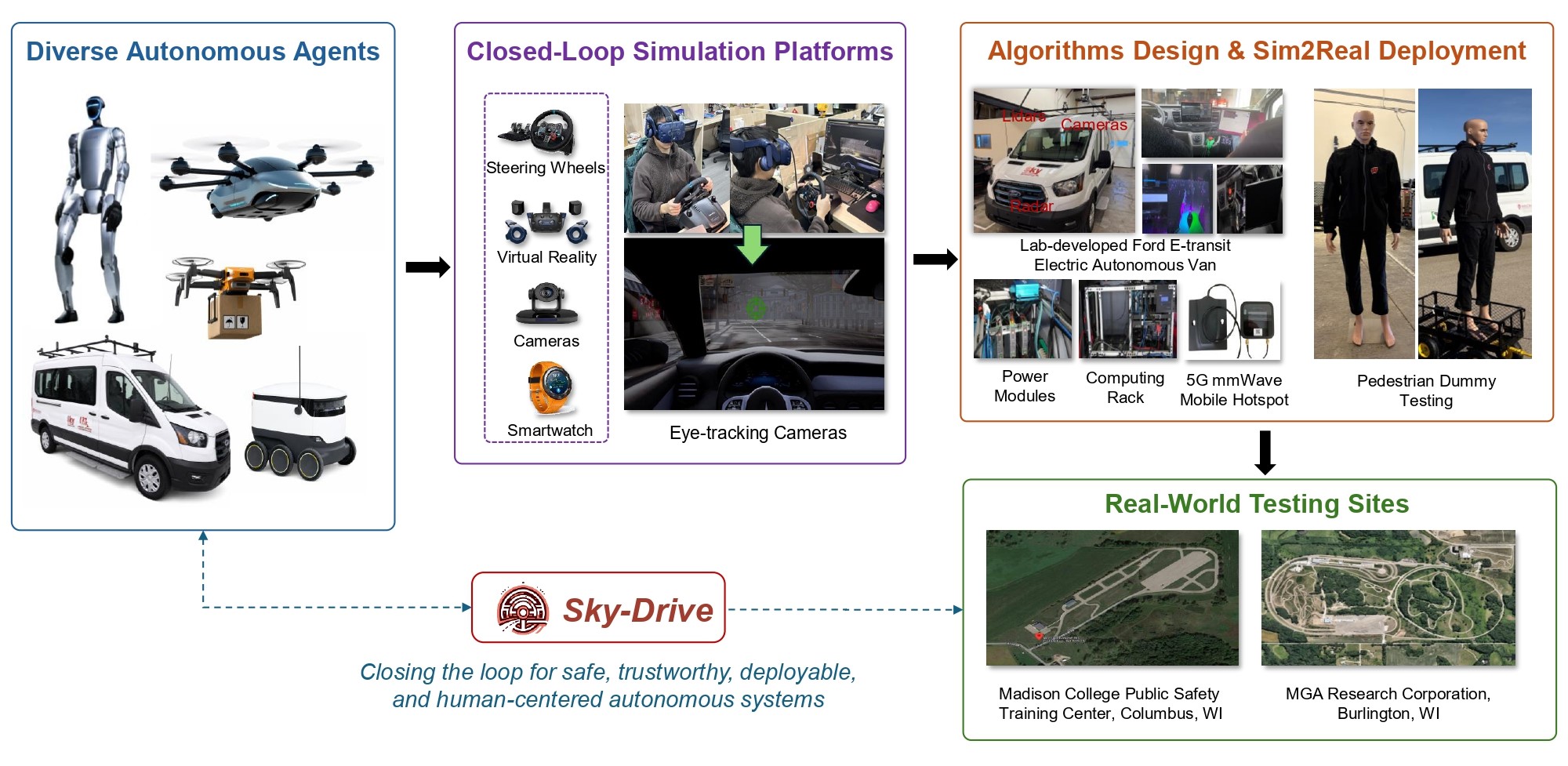
My research interests lie at the intersection of Physical AI and human-centered transportation systems. I envision future mobility as a human–robot–society ecosystem, where humans coexist, interact, and collaborate with diverse autonomous agents (e.g., self-driving vehicles, delivery robots, drones, and other embodied systems). To thrive in such environments, these agents must understand complex physical and social contexts, reason about their actions, adapt to human preferences and social norms, and operate safely and reliably under open-world uncertainty.
Building on this vision, I am dedicated to exploring three interconnected research questions: 1) How can autonomous agents understand complex physical and social environments and make safe, reliable, and human-aware decisions? I integrate human-guided reinforcement learning, physics-informed feedback, and foundation-model-based semantic reasoning to improve safe decision-making, as demonstrated in HAIM-DRL, PE-RLHF, VLM-RL, and DriveVLM-RL. 2) How can capabilities learned in simulation or encoded in foundation models generalize, adapt, and transfer to real physical systems? Through Sim2Real-AD, TRIAGE, DOSE, ExecGap, and MadisonTwin, I investigate deployment gaps, model selection, data-efficient adaptation, and evaluation across environments and physical platforms. 3) How can autonomous agents safely and continuously improve through physical interaction, failure discovery, and real-world feedback? My work on Sky-Drive, Sealed-Loop, and RoadCert explores closed-loop testing, independent evaluation designed to resist reward hacking, and verifiable policy improvement under limited real-world testing budgets.
My long-term goal is to develop Human-centered and Trustworthy Autonomous Systems (HEART) that can safely learn, interact, and collaborate with people in the physical world. Ultimately, I hope to bring the benefits of Physical AI into everyday life, enabling safer, more efficient, and human-centered transportation and robotic systems that improve people’s lives and benefit communities worldwide.
Recent News View All
| Oct 16, 2026 |
|
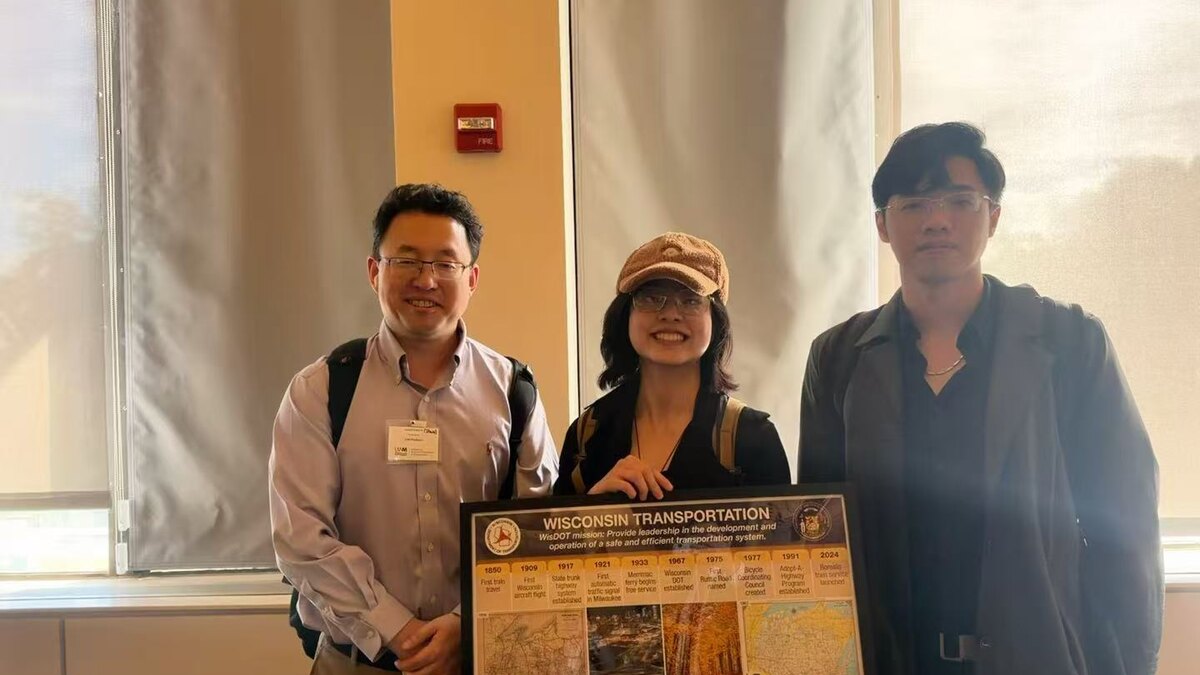
🎤 I attended the 2026 Southeast Wisconsin Transportation Symposium.
I attended the 2026 Southeast Wisconsin Transportation Symposium in Milwaukee and shared our work on Sky-Drive. Read more →
|
|---|---|---|
| Oct 8, 2026 |
|
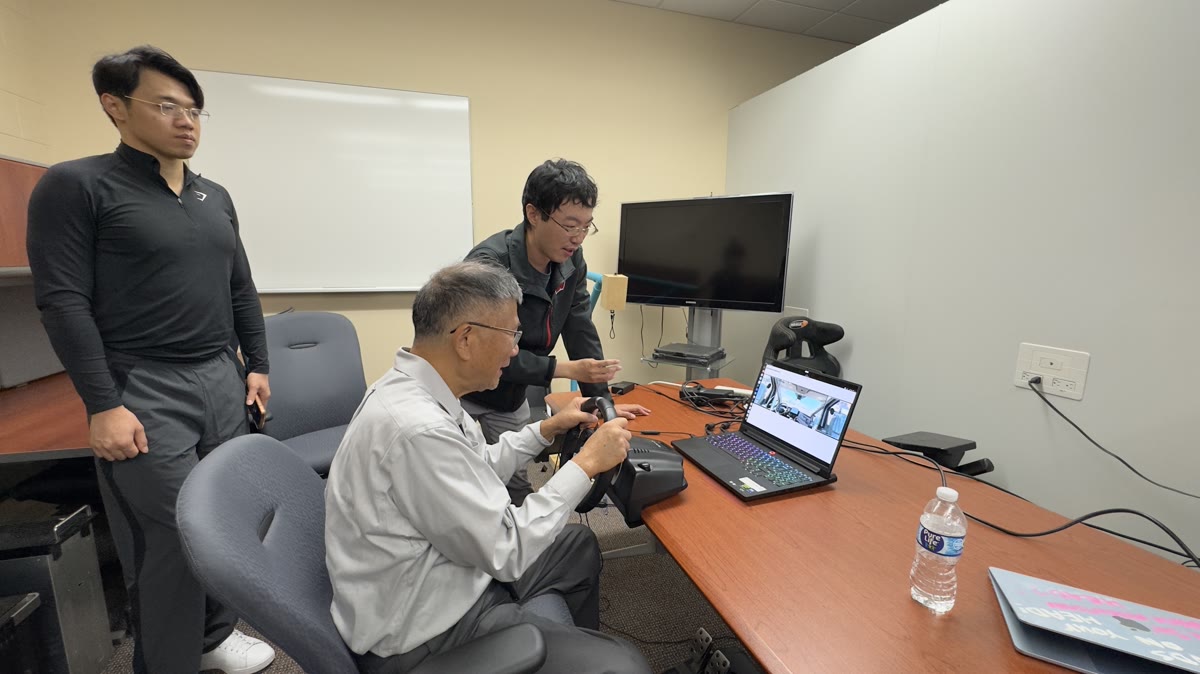
🚐 We demonstrated our remote-driving research to Jong-Shi Pang.
We demonstrated remote-driving research to National Academy of Engineering member Jong-Shi Pang during his visit to UW–Madison. Read more →
|
| Sep 18, 2026 |
|
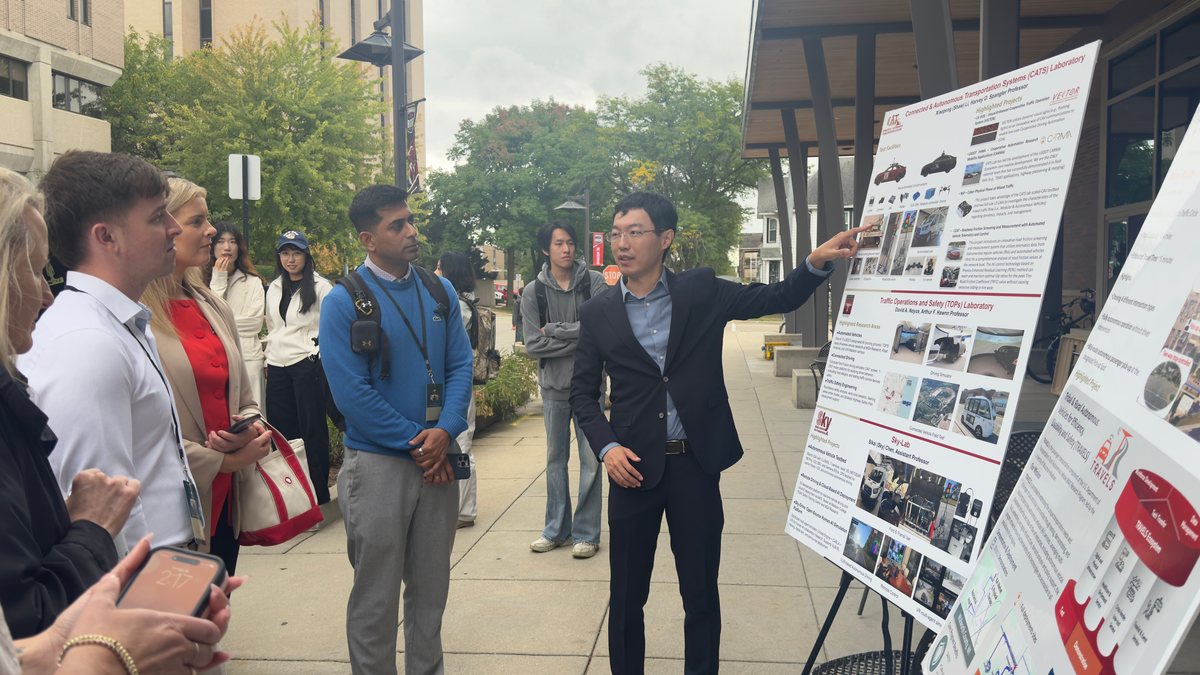
🚐 We demonstrated autonomous vehicle research to an Irish delegation.
We demonstrated connected and autonomous vehicle research to an Irish delegation visiting UW–Madison. Read more →
|
| Aug 27, 2026 |
|
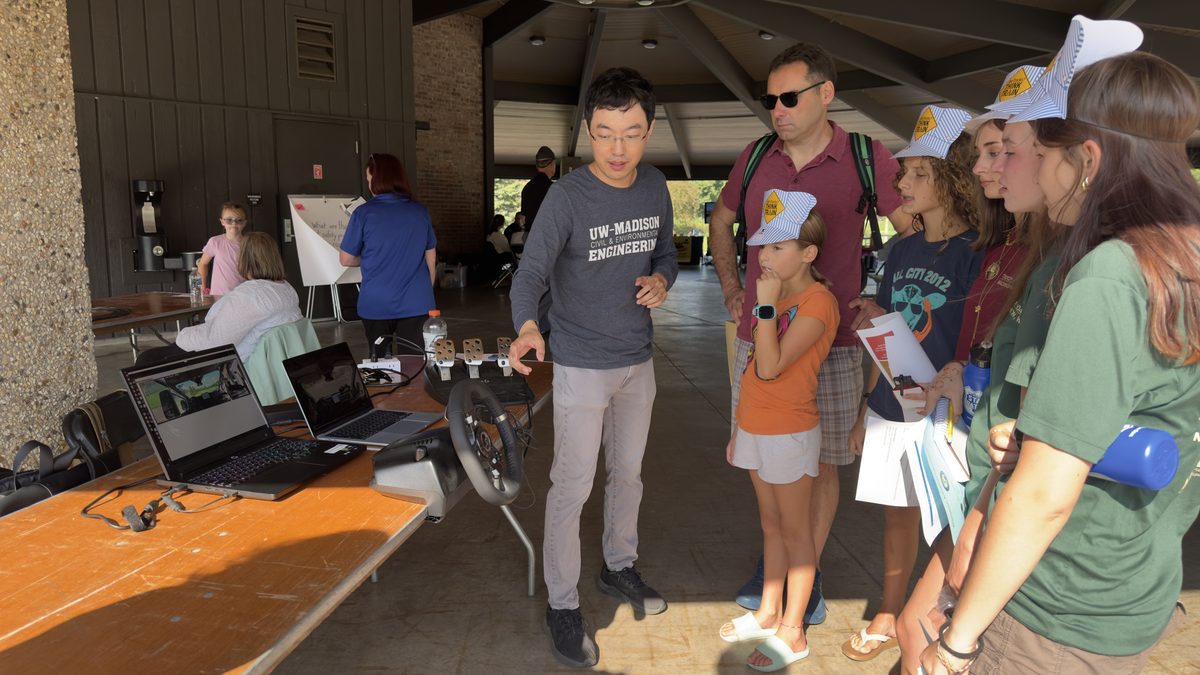
🚐 We demonstrated remote-driving research at WisDOT's Safer Together Community Event.
We shared remote-driving and autonomous vehicle research with the Madison community at WisDOT's Safer Together event. Read more →
|
| Jun 18, 2026 |
|
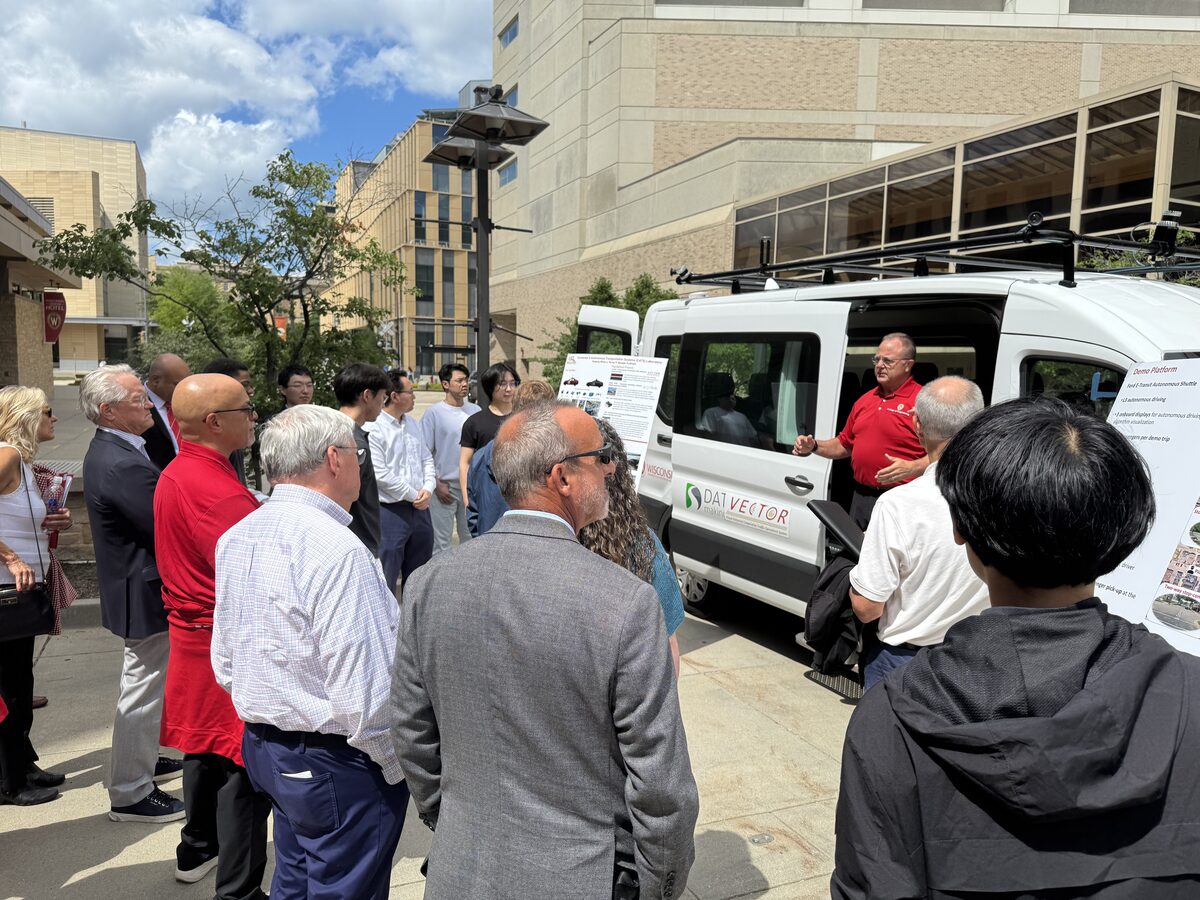
🚐 We demonstrated our autonomous vehicle research to WFAA leaders.
We demonstrated autonomous vehicle research to members of the Wisconsin Foundation and Alumni Association Board of Directors and Alumni Council. Read more →
|
| May 22, 2026 |
|
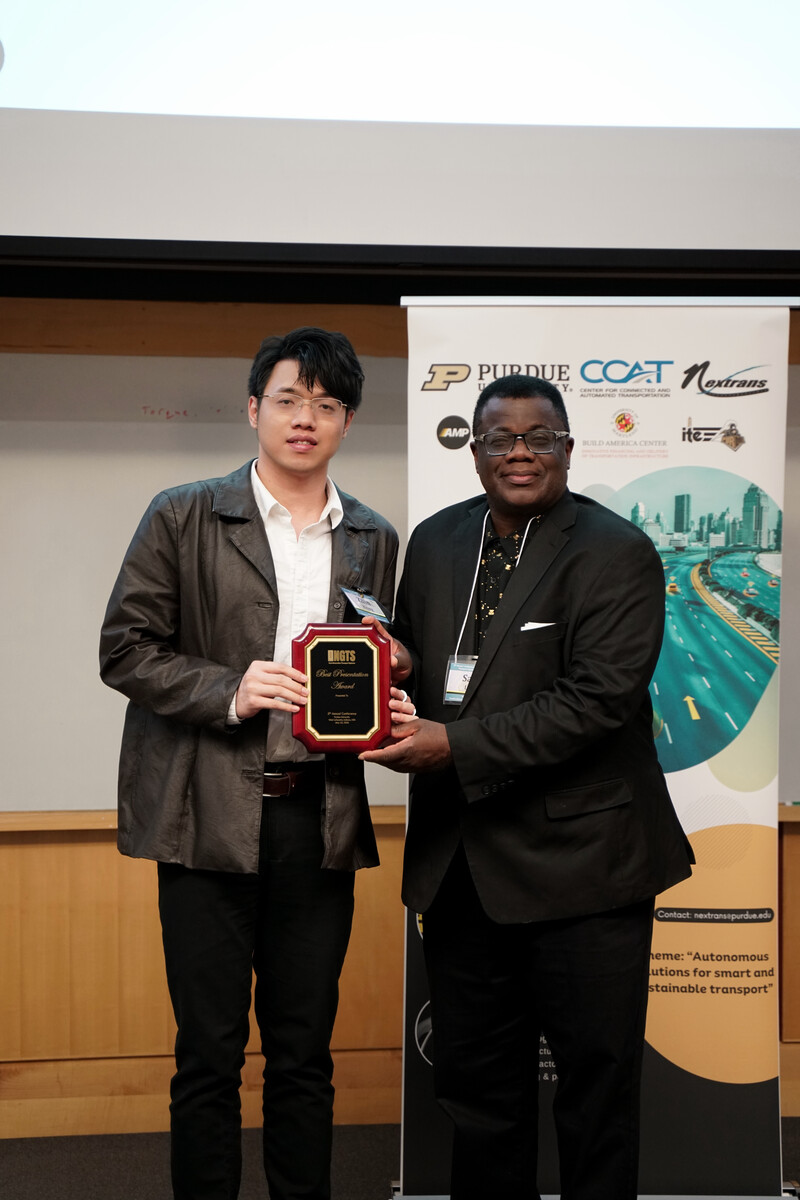
🏆 I received the Best Presentation Award at NGTS 2026.
I returned to Purdue University for the 5th Next-Generation Transport Systems Annual Conference and received the Best Presentation Award. Read more →
|
| May 14, 2026 |
|
🌟 I received the College of Engineering Graduate Student Mentoring Award.
I received the College of Engineering Award for Graduate Student Mentorship and Service in recognition of excellence in research leadership. Read more →
|
| May 8, 2026 |
|
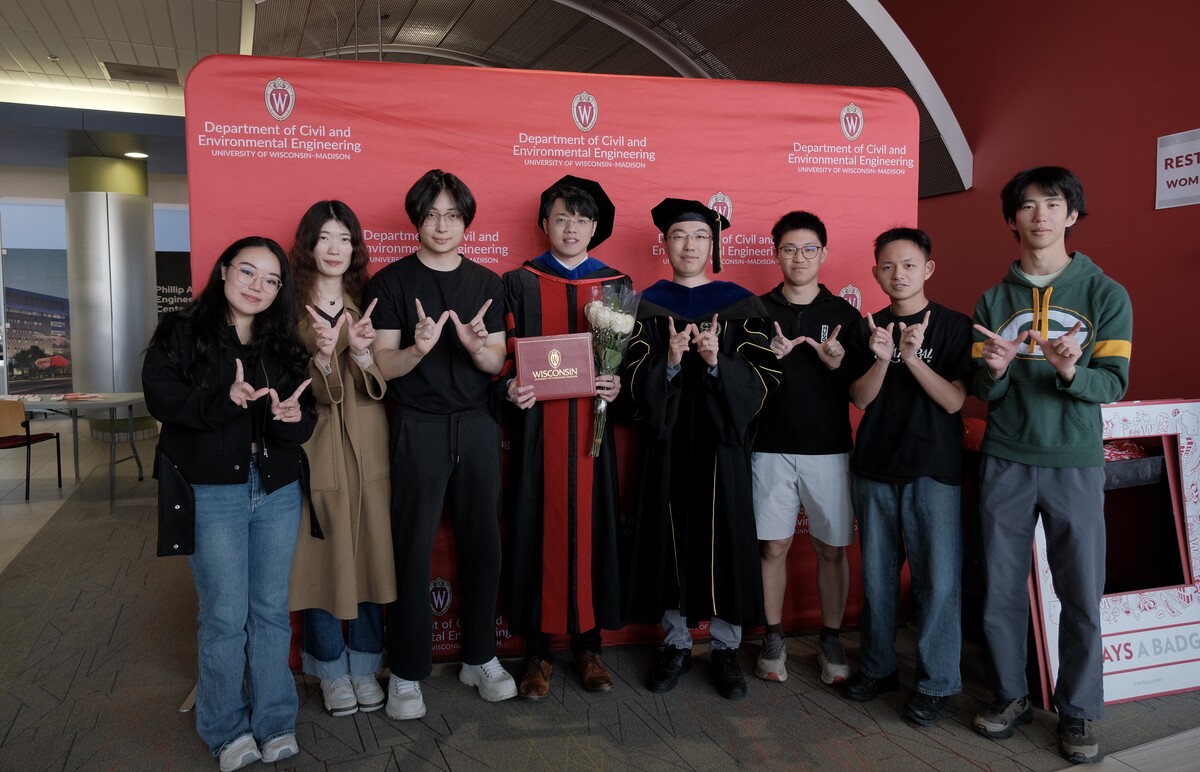
🎓 I celebrated my Ph.D. graduation at UW–Madison.
I attended the UW–Madison doctoral hooding ceremony and the College of Engineering and Department of Civil and Environmental Engineering commencement. Read more →
|
| May 1, 2026 |
|
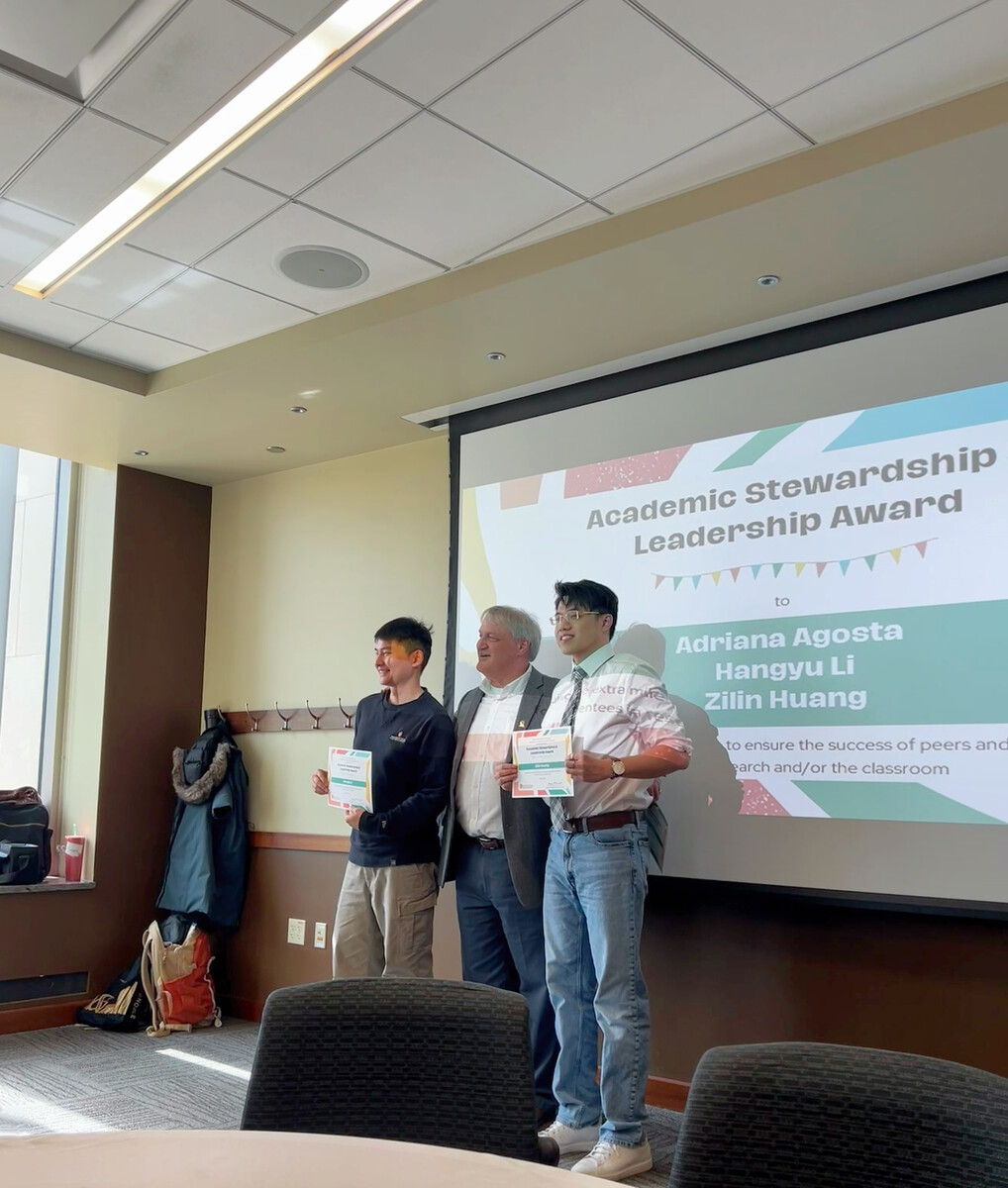
🎓 I received the 2026 CEE Academic Stewardship and Leadership Award.
I received the 2026 Academic Stewardship and Leadership Award from the UW-Madison Department of Civil and Environmental Engineering. Read more →
|
| Apr 10, 2026 |
|
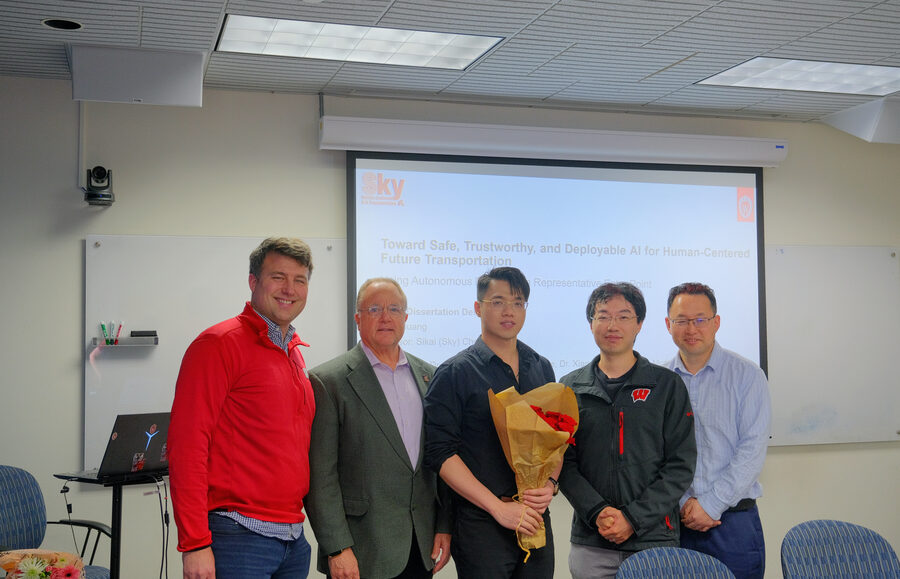
🎓 I successfully defended my Ph.D. dissertation.
I successfully defended my Ph.D. dissertation, Toward Safe, Trustworthy, and Deployable AI for Human-Centered Future Transportation. Read more →
|
View All
-
Preprint
 Sim2Real-AD: A Modular Sim-to-Real Framework for Deploying VLM-Guided Reinforcement Learning in Real-World Autonomous Driving 🔥arXiv preprint arXiv:2604.03497 (Preprint) , 2026
 -
Preprint
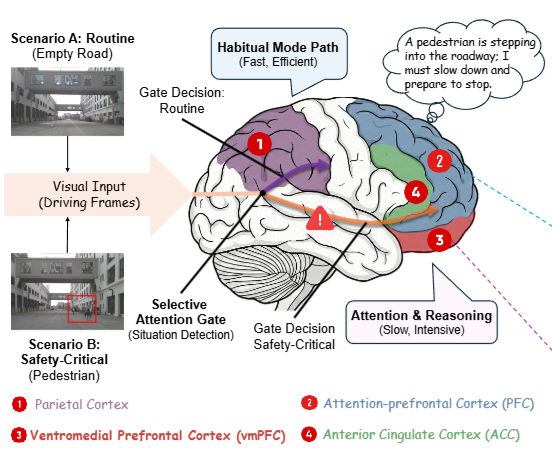 DriveVLM-RL: Neuroscience-Inspired Reinforcement Learning with Vision-Language Models for Safe and Deployable Autonomous Driving 🔥arXiv preprint arXiv:2603.18315 (Preprint) , 2026